Lunar New Year 2027: A Guide to the Year of the Horse

The Lunar New Year in 2027 welcomes the Year of the Goat, according to the Chinese lunar calendar. Celebrated by millions around the world, this is a time for cultural traditions, family reunions, and hopes for good fortune in the coming year.
In 2027, Lunar New Year falls on February 6th, kicking off the 16-day Spring Festival.
As we leave behind the vibrant and fiery Year of the Horse, the Year of the Goat arrives with gentle and creative energy, symbolizing harmony, compassion, and a thoughtful approach to life.
What is Lunar New Year?
Lunar New Year, also known as Chinese New Year or Spring Festival, marks the start of a new zodiac cycle based on the Chinese lunar calendar. Each year, the date shifts within the Gregorian calendar.

This festival is celebrated worldwide, particularly in Asian countries like China. Festivities include red decorations, elaborate meals, thorough cleaning of homes, and visiting family.
A major tradition involves lighting firecrackers, originating from the legend of the monster Nian.
Who was the Monster Nian?
According to legend, Nian was a terrifying beast with sharp teeth and horns, living deep in the sea. Every Lunar New Year’s Eve, Nian would come ashore to wreak havoc in the villages.
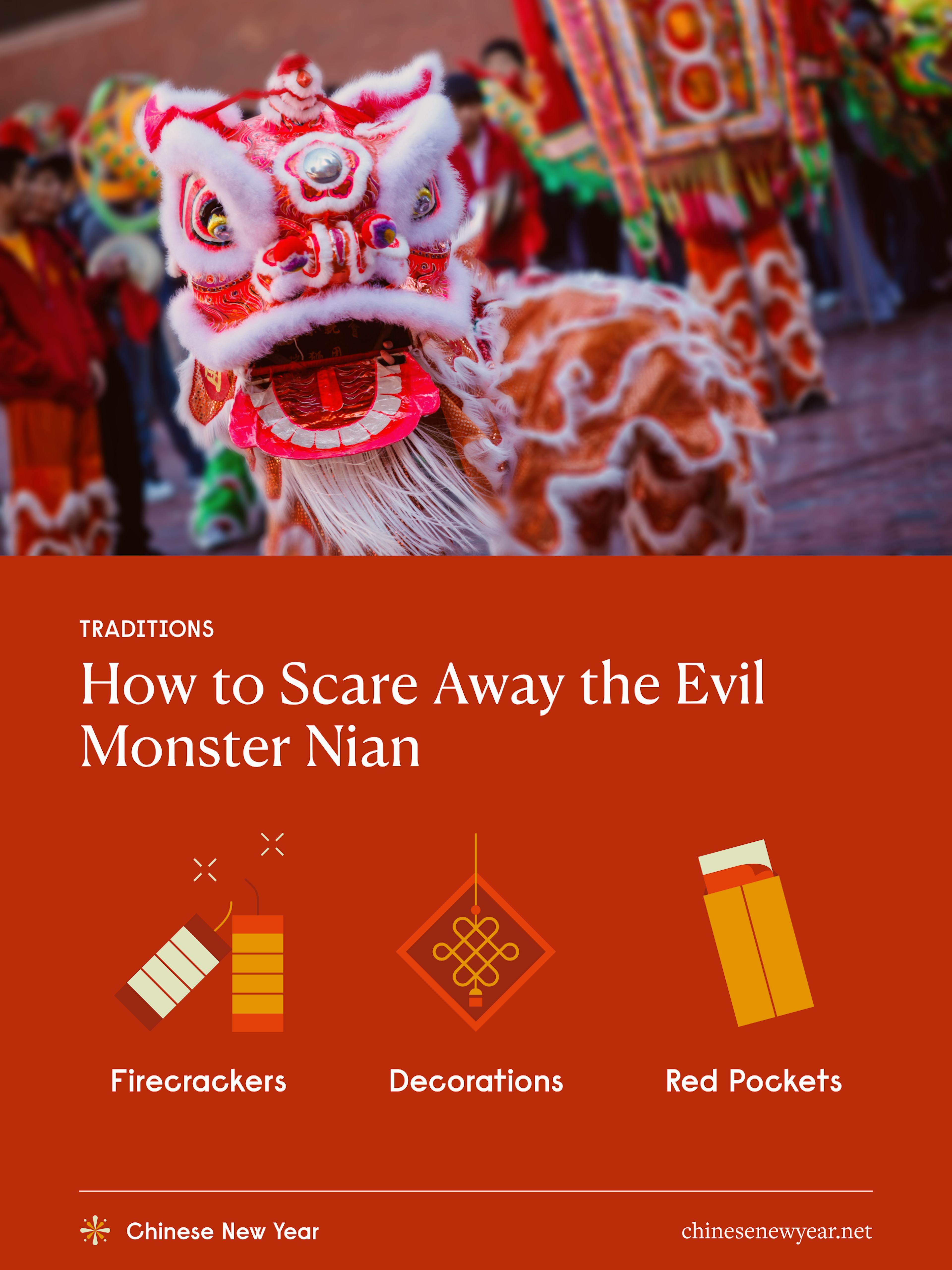
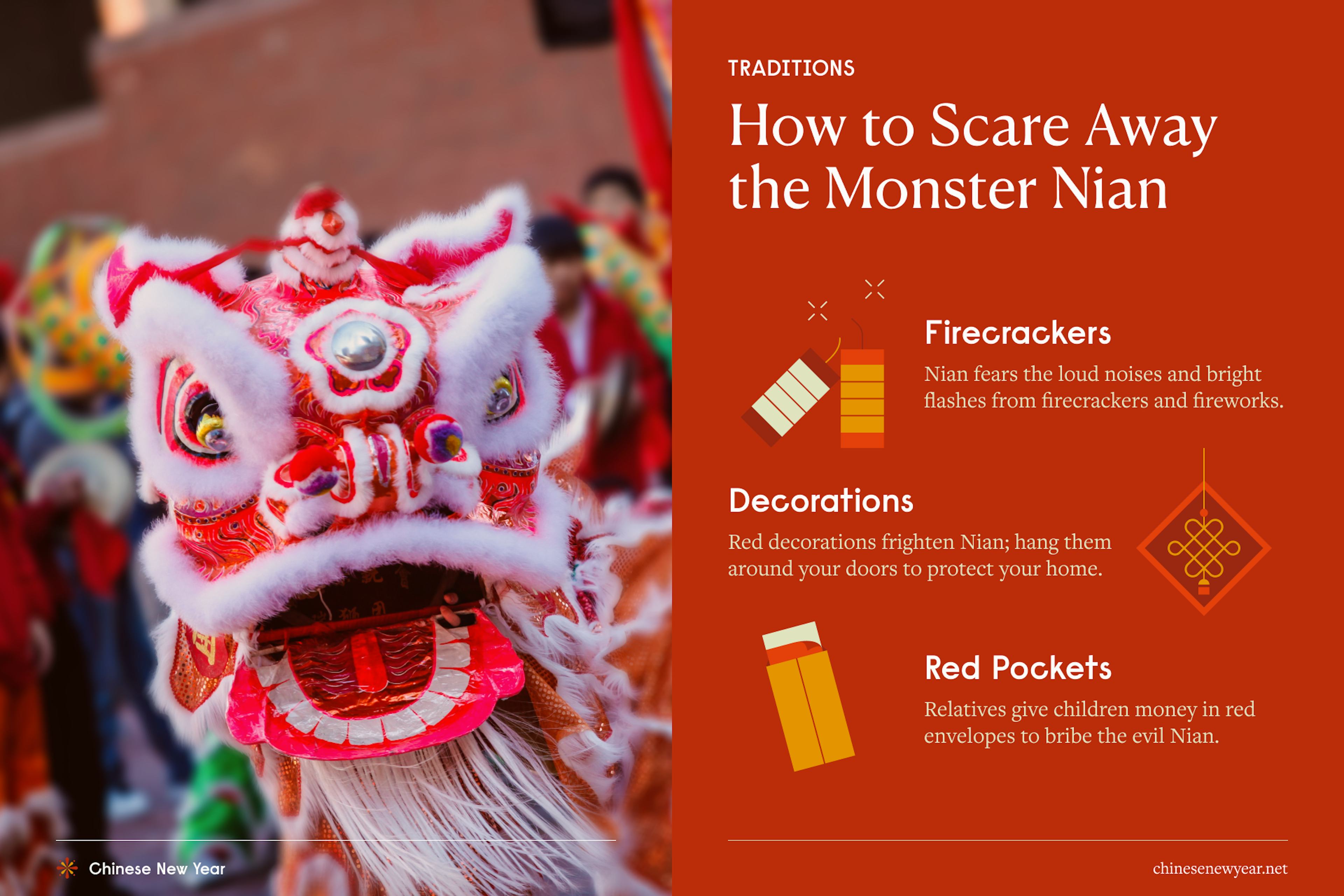
One year, the villagers discovered that Nian feared the color red and loud noises. To protect themselves, they hung red decorations and lit firecrackers to scare the monster away. The strategy worked, and Nian was driven back to the sea.
This story explains two important traditions—hanging red decorations and lighting firecrackers—representing victory over evil and a fresh start to the year.
Why Is 2027 the Year of the Goat?
The Chinese zodiac follows a 12-year cycle, with each year represented by a different animal. In 2027, the cycle brings us to the Goat, the eighth animal in the zodiac order.
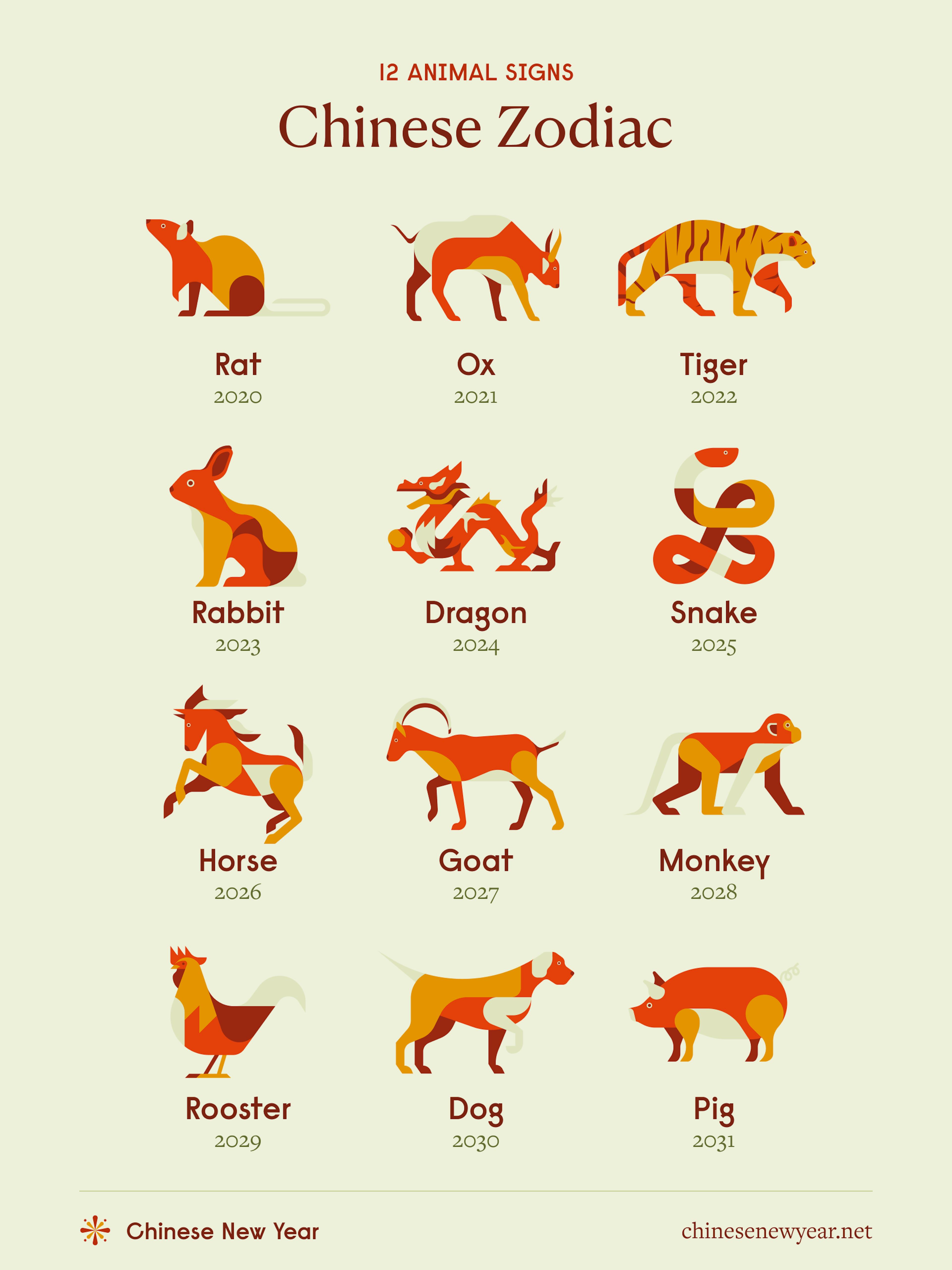
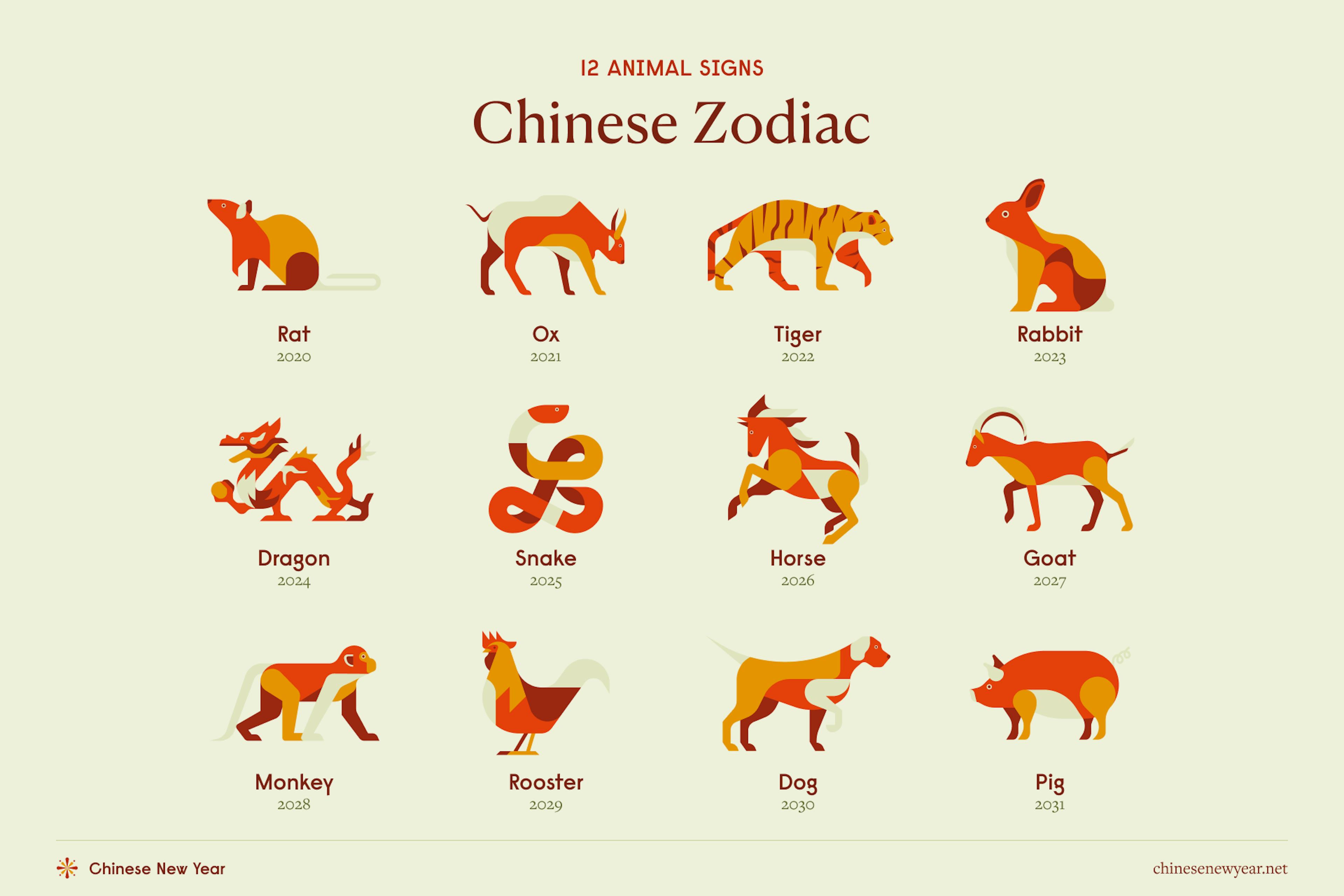
According to Chinese mythology, the order of the zodiac animals was decided by a Great Race held by the Jade Emperor. The clever Snake coiled around the Horse’s hoof, managing to finish the race ahead of the Horse and causing the Horse to fall into the seventh place.
Unlike the energetic and adventurous Horse, the Goat embodies gentleness, creativity and harmony, bringing a year focused on balance, relationships and thoughtful progress.
For those born in a Goat year, 2027 is their Ben Ming Nian—a year traditionally believed to bring bad luck due to a clash with Tai Sui, the God of Age.
What Are People Born in the Year of the Goat Like?
Goats are gentle, creative, and compassionate. In the zodiac, they thrive in harmonious settings and are often seen as thoughtful, caring, and quietly determined.
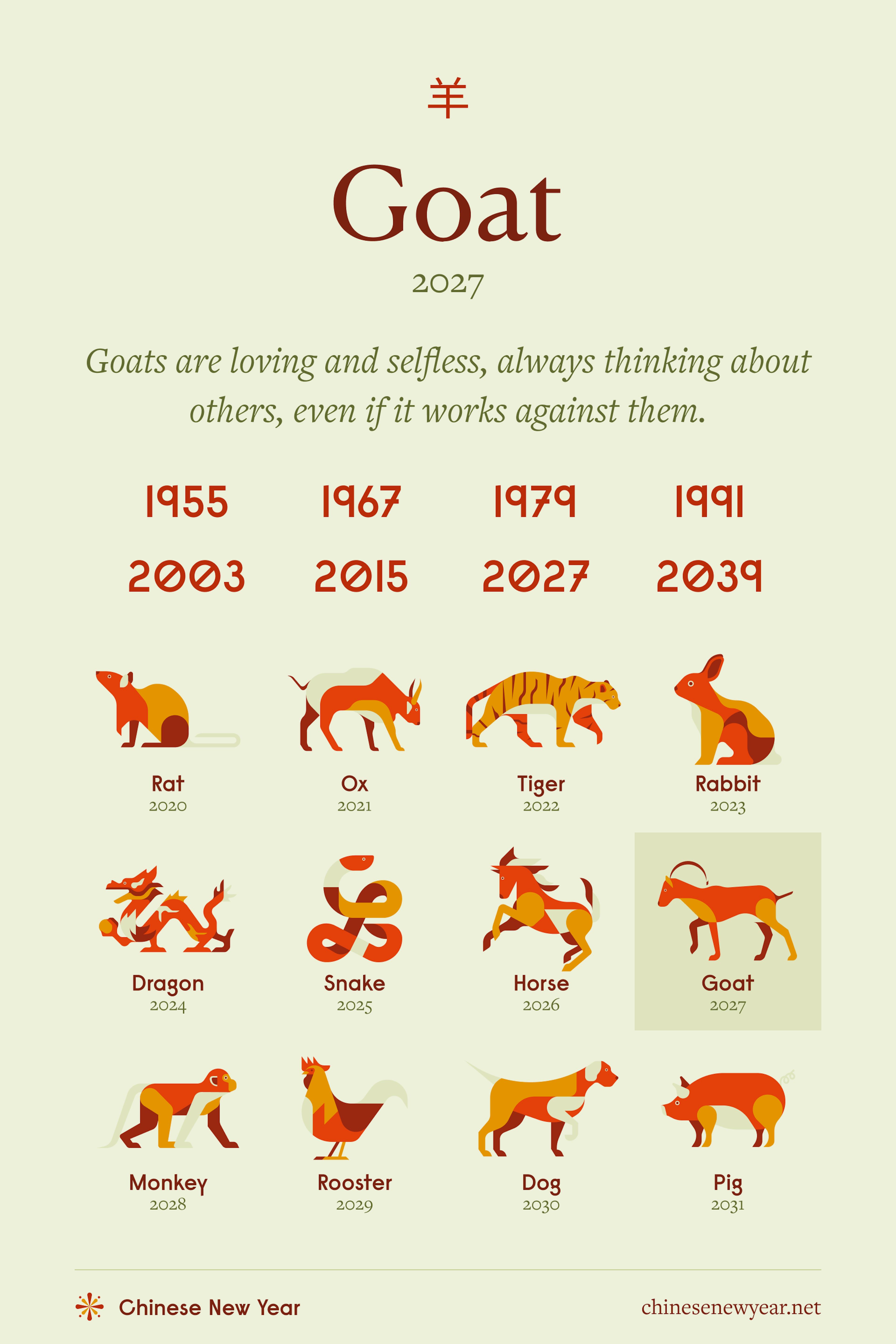
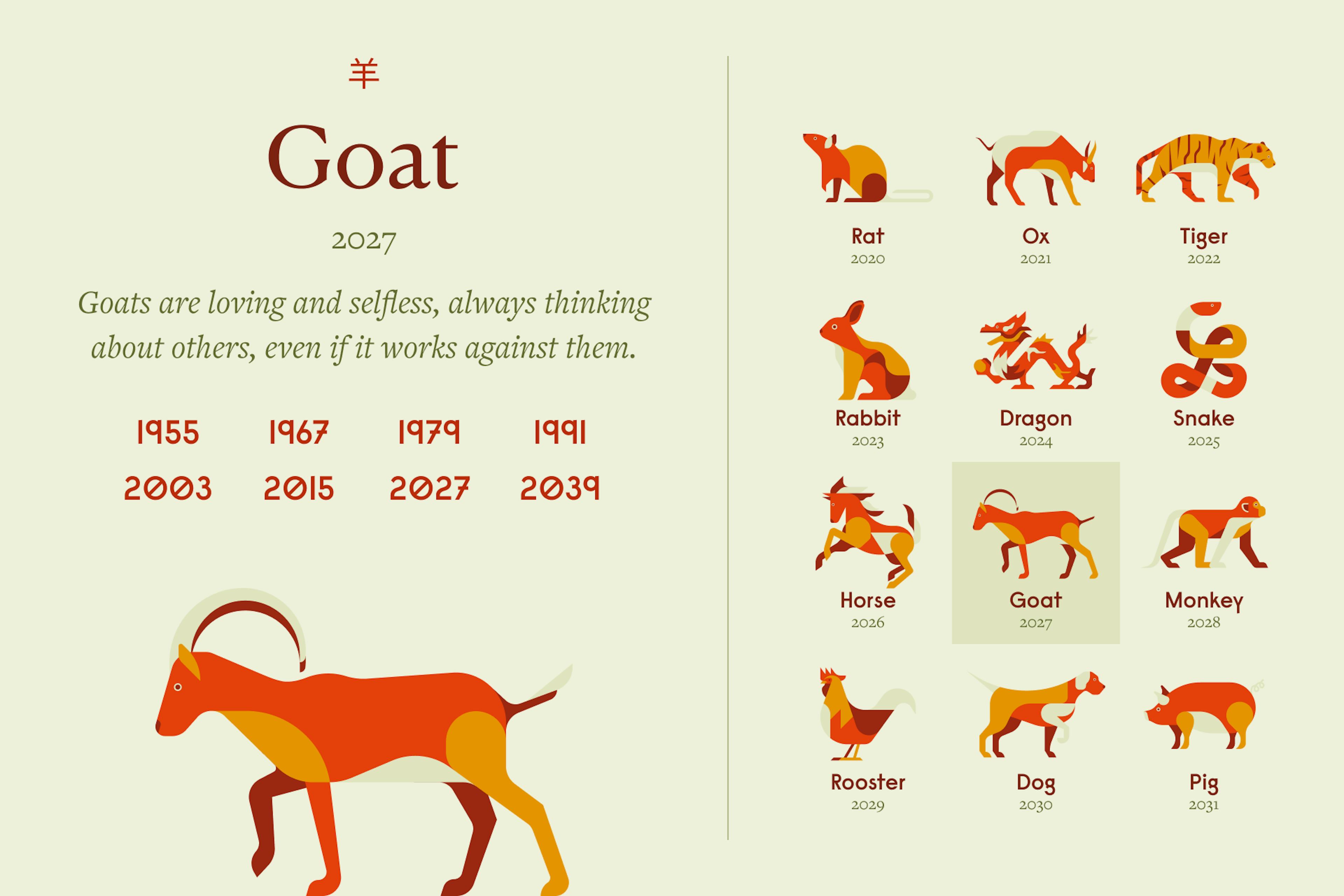
To protect themselves from the bad luck of their Ben Ming Nian, those born in the Year of the Goat are encouraged to wear red throughout 2027. Red underwear, socks, or accessories are believed to ward off misfortune and invite blessings.
Though their zodiac year may bring challenges, these obstacles often lead to greater wisdom and personal growth for Goats.
If Goats Are Unlucky This Year, What About My Zodiac Sign?
Each zodiac sign has a unique relationship with the Year of the Goat. If you're unsure of your zodiac sign, you can easily find it with an online zodiac calculator (or using the one below).
Chinese zodiac calculator


Curious, resourceful, and quick-witted, Rat’s natural charm opens doors to opportunity. Your dynamic personality... more
Some signs, like the Horse and Pig, are compatible with the Goat. These signs share values like warmth and generosity, making for a smoother year ahead.
However, for signs like the Ox and Rat, 2027 could pose some challenges. The Ox’s determined nature and the Rat’s resourcefulness may clash with the Goat’s more gentle and peace-loving approach.
Preparing for the Lunar New Year
The phrase Guo Nian, meaning “celebrating the new year” in Chinese, evokes warm feelings of family reunions.
In China, the Lunar New Year is marked by Chun Yun, the world’s largest human migration, as millions travel to reunite with their families weeks in advance.
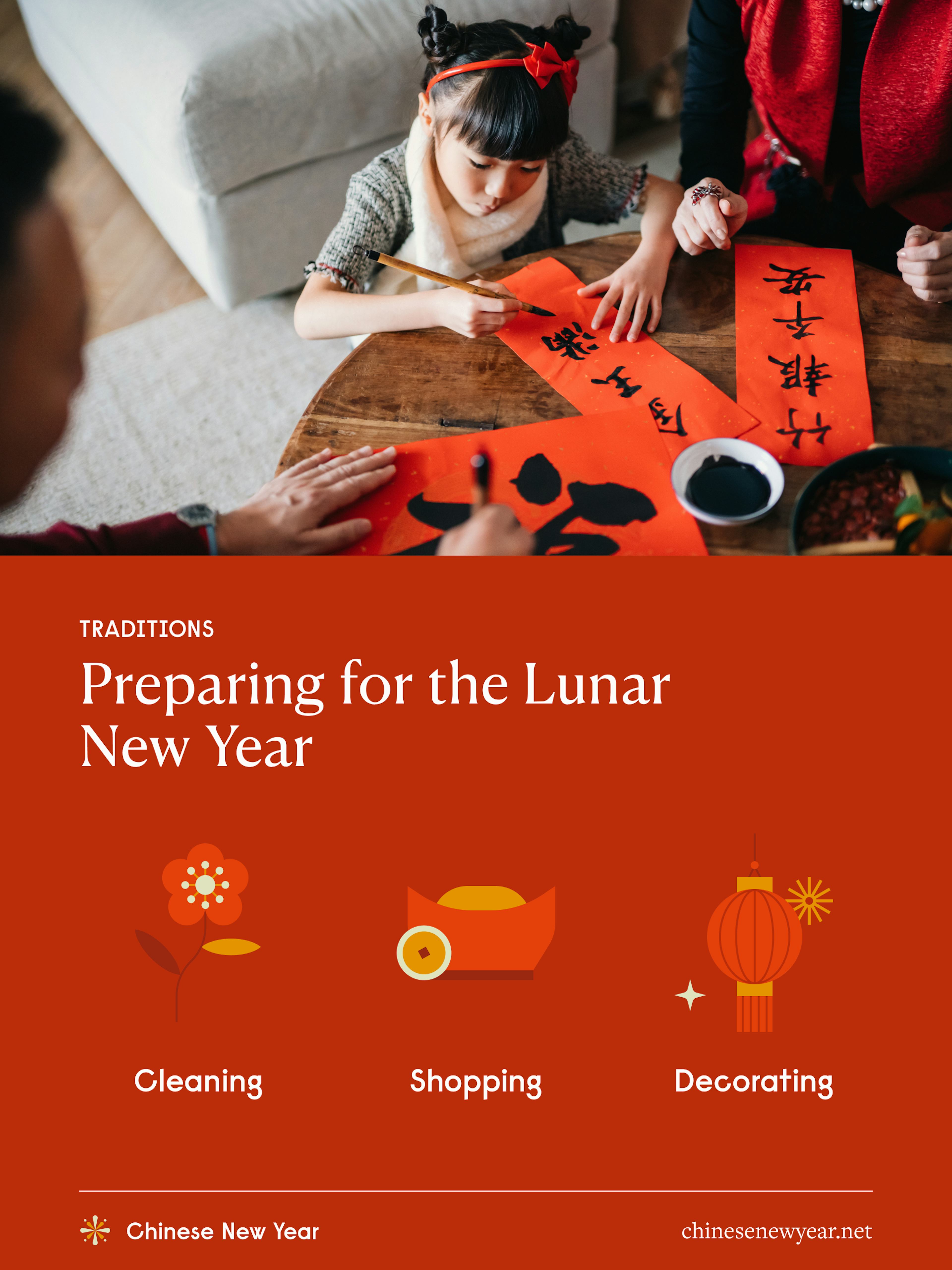
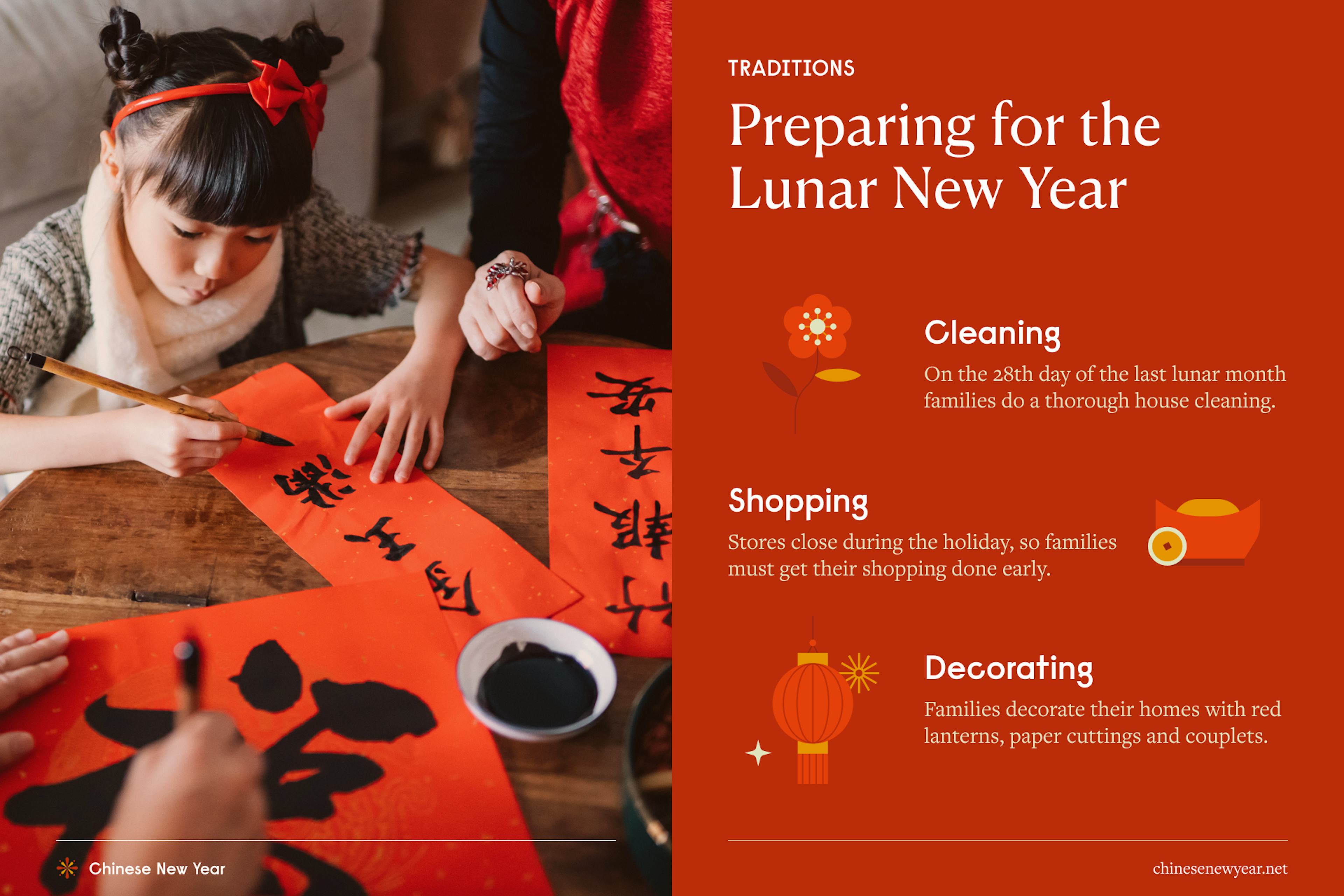
Red is the dominant color for decorations, which include red lanterns, paper cuttings, Spring Festival couplets, and strings of chili peppers. These are all designed to ward off Nian and invite good fortune.
New clothes, especially for children, add excitement to the holiday. Wearing new red clothes on New Year’s Day symbolizes a fresh start and invites good luck.
On the 28th day of the last lunar month, families do a thorough house cleaning to sweep away any lingering bad luck, making way for a fresh beginning. But there are some taboos to keep in mind…
What Not to Do: 3 Common Taboos
Do not clean until the fifth day: Sweeping, taking out the trash, or even doing laundry before the fifth day could wash away your newfound luck.
Avoid sharp objects: Using scissors or knives could “cut” the flow of wealth and success. This is also why most barbershops in China close during the holiday.
Don’t break ceramics or glass: Breaking something is believed to shatter your connection to good fortune. If this happens, say the phrase Sui Sui Ping An to pray for peace and safety.
Lunar New Year’s Eve: The Reunion Dinner
At the heart of Lunar New Year celebrations is the reunion dinner on Lunar New Year’s Eve, which falls on February 5th, 2027.
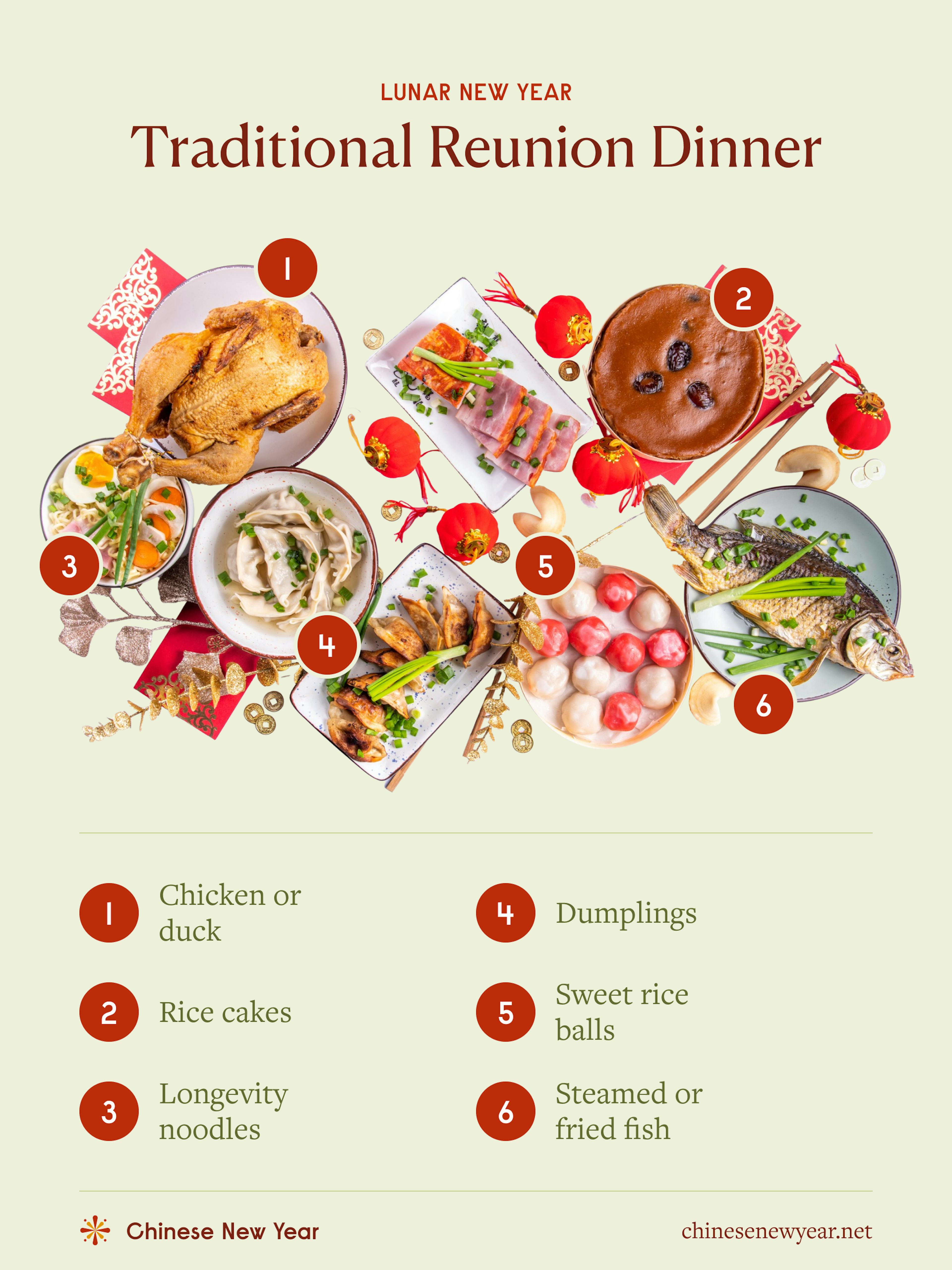
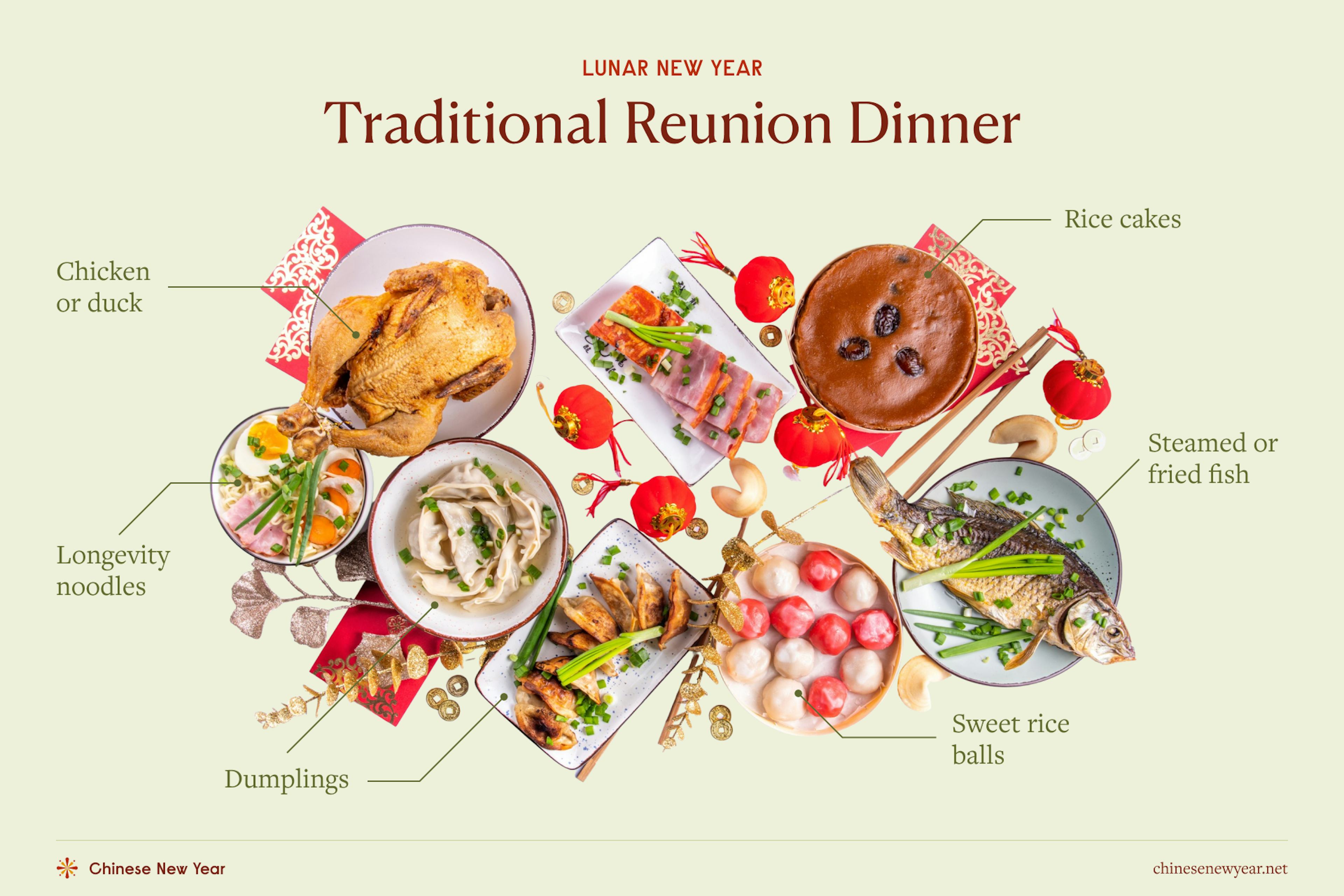
This meal features dishes with special meanings. Dumplings, shaped like gold ingots, symbolize wealth. Fish, whose Chinese name sounds like the word for “surplus,” represents abundance. Noodles signify longevity.
In northern China, people traditionally eat dumplings and noodles, while in the south, Nian Gao (sticky rice cake) is a must-have, symbolizing rising fortunes.
The reunion dinner is a time when families feel closest to one another.
New Year’s Day: Family Visits
The first and second days of the Lunar New Year are reserved for visiting family and friends. A key part of this tradition is the exchange of Hong Bao (red envelopes), which carry good wishes.
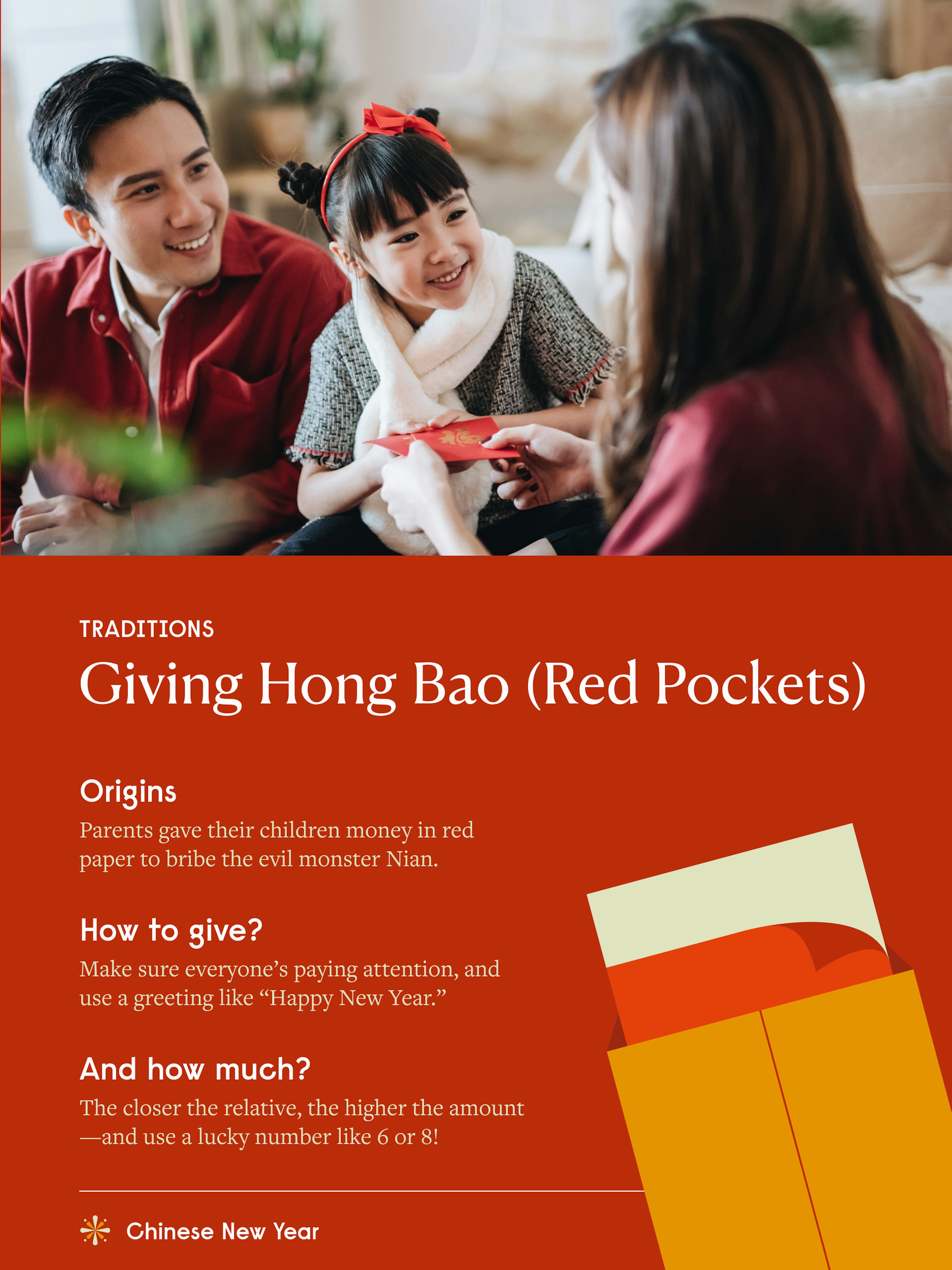
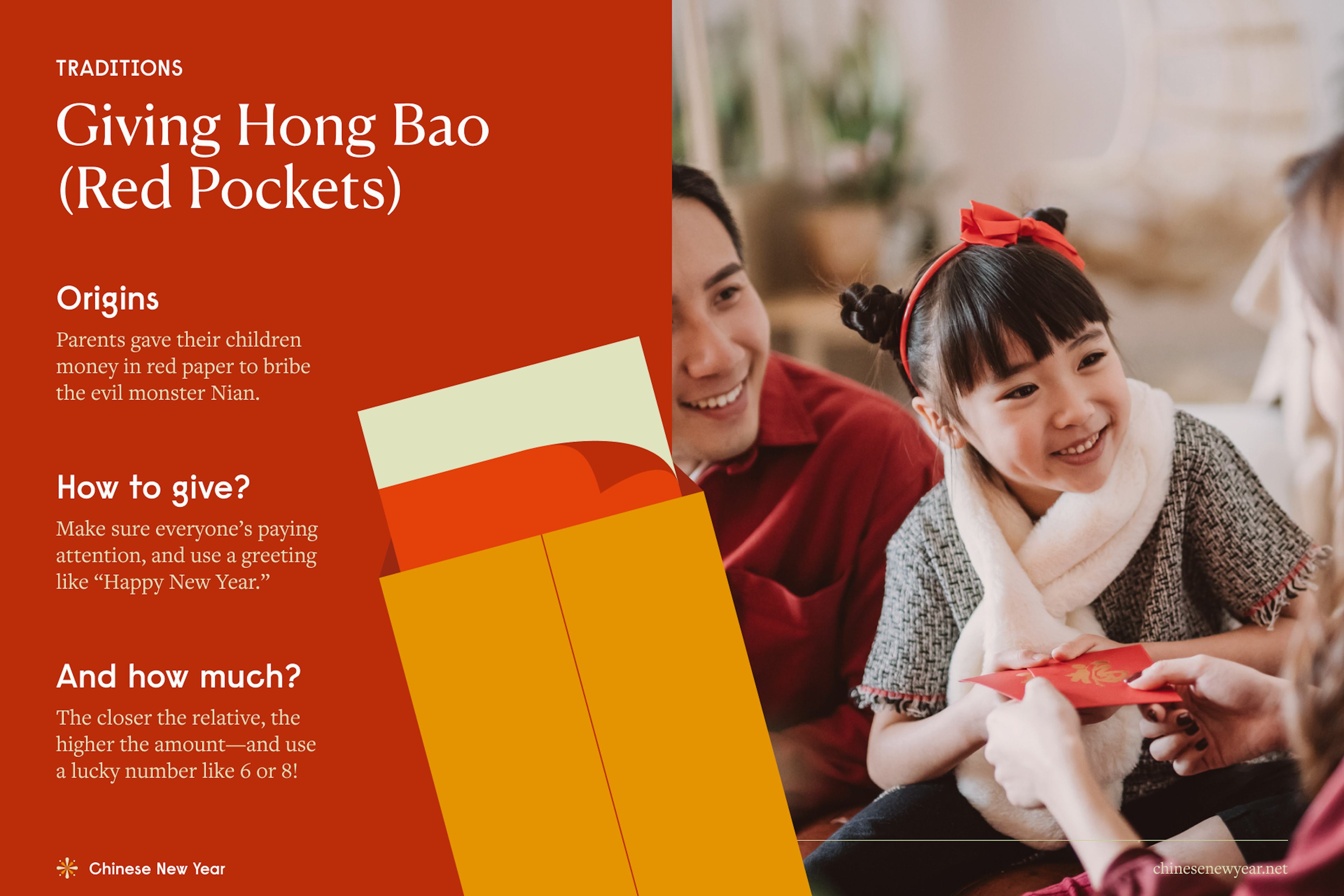
In the past, the gesture behind the red pockets was more important than the amount of money inside. Nowadays, unfortunately, the focus has shifted more toward the amount rather than the goodwill it represents.
When visiting, it’s customary to bring gifts, such as fruits or beverages, and exchange greetings like Gong Xi Fa Cai (wishing you prosperity) and Guo Nian Hao (happy new year).
Day 3: Temple Visits
In many Chinese cities, the local temple serves as a spiritual center. The third day of the new year, February 9th, 2026, is traditionally a day for visiting temples.
People visit to make offerings, seek blessings from deities, and consult fortune-tellers about the year ahead. This is also a time to pause and reflect spiritually as the new year begins.
Day 5: Welcoming the God of Wealth
The fifth day of the new year is dedicated to welcoming Cai Shen, the God of Wealth. Households hang images of Cai Shen to invite wealth and prosperity for the year ahead.
Nowadays, some people even change their phone or computer wallpaper to a picture of Cai Shen for a modern twist on this tradition.
Day 15: The Lantern Festival
The Lunar New Year celebrations conclude with the Lantern Festival, falling on February 20th, 2027, which marks the first full moon of the lunar year.
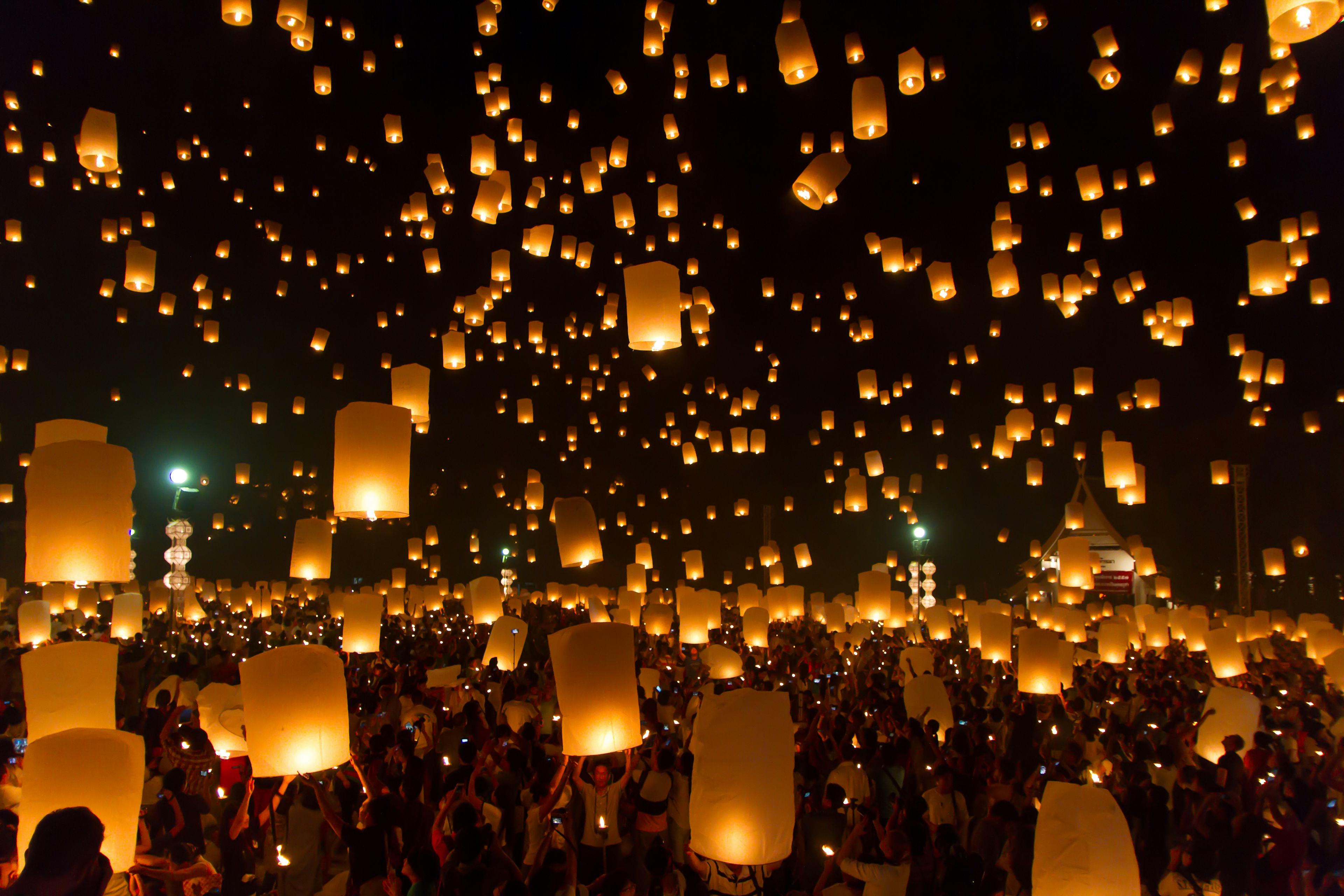
Known as Yuan Xiao Jie in Chinese, this festival is famous for its Yuan Xiao (sweet rice balls), whose round shape symbolizes family unity and togetherness.
Cities are illuminated with spectacular lantern displays and lively dragon dances, bringing a joyful end to the new year festivities and ushering in hopes for a prosperous year ahead.
Lunar New Year Around the World
Lunar New Year is celebrated in many Asian countries beyond China. In Korea, Seollal involves honoring ancestors and eating rice cake soup, while in Vietnam, Tết is marked by decorating homes with peach blossoms and giving lucky money to children.
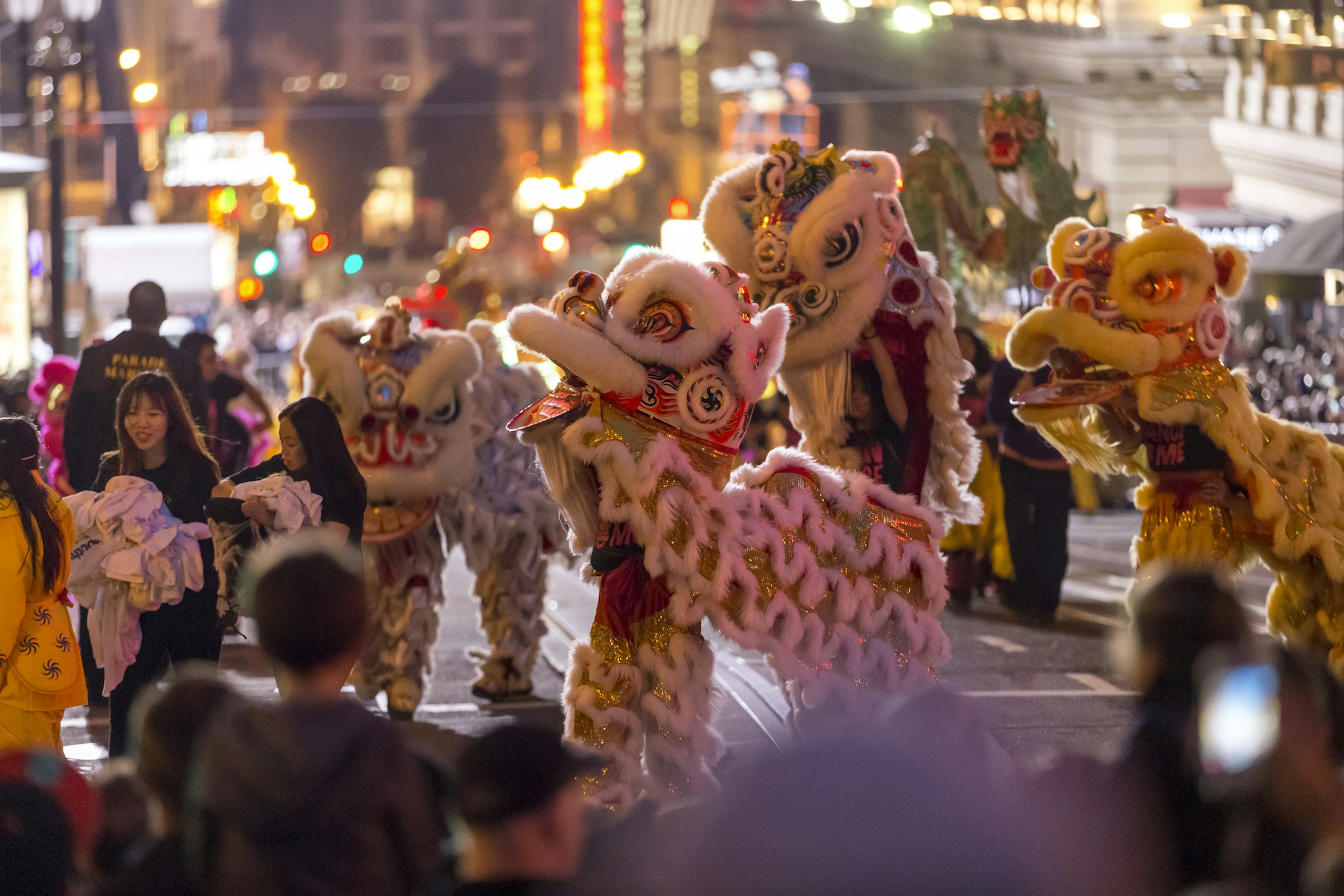
Cities like New York, San Francisco, and London also host parades featuring dragon dances, fireworks, and lantern festivals, welcoming the new year with excitement and good fortune.
Each country has its own traditions, but the core values remain the same—family, food, and hopes for a prosperous year ahead.